

Every exotic animal deserves the right nutrition
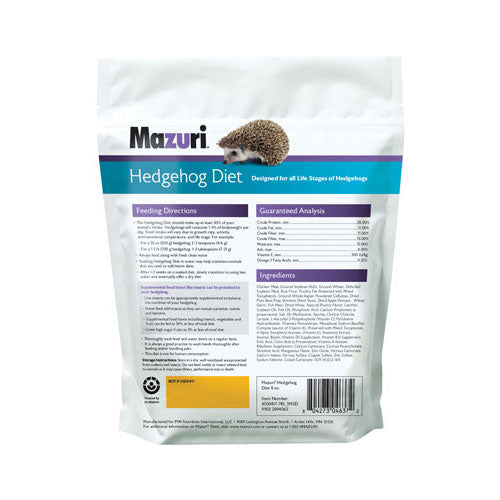
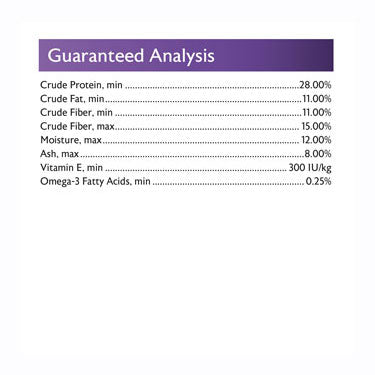
| Crude protein not less than Crude fat not less than Crude fiber not less than Crude fiber not more than Moisture not more than Ash not more than Vitamin E not less than Omega-3 Fatty Acids not less than | 28.00% 11.00% 11.00% 15.00% 12.00% 8.00% 300 IU/kg 0.25% |
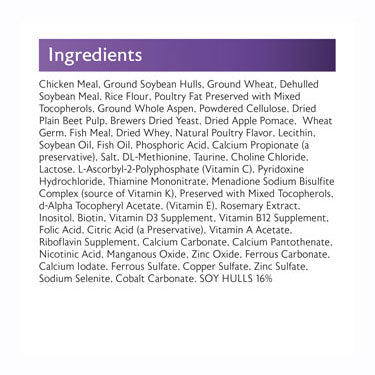
Chicken Meal, Ground Soybean Hulls, Ground Wheat, Dehulled Soybean Meal, Rice Flour, Poultry Fat Preserved with Mixed Tocopherols, Ground Whole Aspen, Cellulose, Dried Plain Beet Pulp, Brewers Dried Yeast, Dried Apple Pomace, Wheat Germ, Dried Whey, Fish Meal, Natural Poultry Flavor, Soybean Oil, Lecithin, Fish Oil, Phosphoric Acid, Calcium Propionate (a Preservative), Salt, DL-Methionine, Taurine, Choline Chloride, Lactose, L-Ascorbyl-2-Polyphosphate (Vitamin C), Pyridoxine Hydrochloride, Thiamine Mononitrate, Menadione Sodium Bisulfite Complex (Vitamin K), Manganous Oxide, D-Alpha Tocopheryl Acetate (Vitamin E), Preserved with Mixed Tocopherols, Inositol, Cholecalciferol (Vitamin D3), Rosemary Extract, Vitamin B12 Supplement, Folic Acid, Citric Acid (a Preservative), Vitamin A Acetate, Riboflavin-5-Phosphate, Calcium Carbonate, Calcium Pantothenate, Nicotinic Acid, Zinc Oxide, Ferrous Carbonate, Calcium Iodate, Ferrous Sulfate, Copper Sulfate, Zinc Sulfate, Sodium Selenite, Biotin, Cobalt Carbonate.
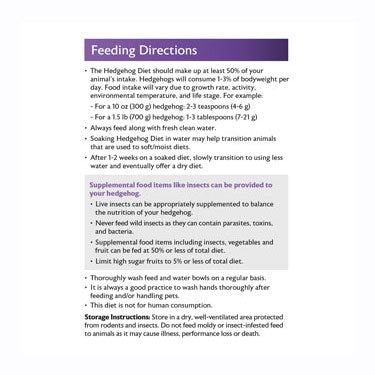
- The Hedgehog Diet should make up at least 50% of your animal’s intake. Hedgehogs will consume 1-3% of bodyweight per day. Food intake will vary due to growth rate, activity, environmental temperature, and life stage. For example:
- For a 10 oz (300 g) hedgehog: 2-3 teaspoons (4-6 g)
- For a 1.5 lb (700 g) hedgehog: 1-3 tablespoons (7-21 g)
- Soaking Hedgehog Diet in water may help transition animals that are used to soft/moist diets.
- After 1-2 weeks on a soaked diet, slowly transition to using less water and eventually offer a dry diet.
- Supplemental food items including insects, vegetables, and fruit can be fed at 50% or less of the total diet.
- Always provide plenty of fresh, clean water.
- Thoroughly wash feed and water bowls on a regular basis. It is always good practice to wash hands thoroughly after feeding and/or handling animals.
- This diet is not for human consumption.
Storage Conditions
For best results, reseal the bag between uses or store contents of open paper sack in container with sealing lid. Store in a cool (75⁰F/24⁰C or colder), dry (approximately 50% RH) location free from rodents and insects. Do not offer moldy or insect-infested feed to animals as it may result in illness, performance loss or death. Freezing will not harm the diet and may extend freshness. Use within 1 year of bag manufacturing or "Best if Used By" date.
Ask Our Experts
Get nutrition advice you can trust from experts who understand the unique nutritional needs and behaviors of your exotic animals.
Get Advice